Biyografi
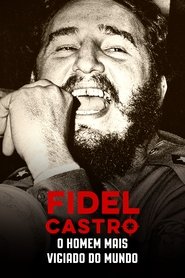
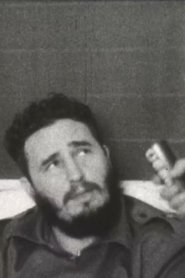
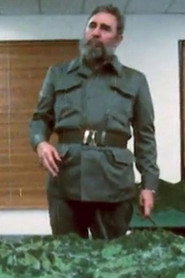
Fidel Alejandro Castro Ruz (13 August 1926 – 25 November 2016) was a Cuban revolutionary and politician who served as Prime Minister of Cuba from 1959 to 1976 and President from 1976 to 2008. Ideologically a Marxist–Leninist and Cuban nationalist, he also served as the First Secretary of the Communist Party of Cuba from 1961 until 2011. Under his administration, Cuba became a one-party communist state; industry and business were nationalized, and state socialist reforms were implemented throughout society. Born in Birán, Oriente, the son of a wealthy Spanish farmer, Castro adopted leftist and anti-imperialist ideas while studying law at the University of Havana. After participating in rebellions against right-wing governments in the Dominican Republic and Colombia, he planned the overthrow of Cuban President Fulgencio Batista, launching a failed attack on the Moncada Barracks in 1953. After a year's imprisonment, Castro traveled to Mexico where he formed a revolutionary group, the 26th of July Movement, with his brother Raúl Castro and Ernesto "Che" Guevara. Returning to Cuba, Castro took a key role in the Cuban Revolution by leading the Movement in a guerrilla war against Batista's forces from the Sierra Maestra. After Batista's overthrow in 1959, Castro assumed military and political power as Cuba's Prime Minister. The United States came to oppose Castro's government and unsuccessfully attempted to remove him by assassination, economic blockade, and counter-revolution, including the Bay of Pigs Invasion of 1961. Countering these threats, Castro aligned with the Soviet Union and allowed the Soviets to place nuclear weapons in Cuba, resulting in the Cuban Missile Crisis – a defining incident of the Cold War – in 1962. Adopting a Marxist–Leninist model of development, Castro converted Cuba into a one-party, socialist state under Communist Party rule, the first in the Western Hemisphere. Policies introducing central economic planning and expanding healthcare and education were accompanied by state control of the press and the suppression of internal dissent. Abroad, Castro supported anti-imperialist revolutionary groups, backing the establishment of Marxist governments in Chile, Nicaragua, and Grenada, as well as sending troops to aid allies in the Yom Kippur, Ogaden, and Angolan Civil War. These actions, coupled with Castro's leadership of the Non-Aligned Movement from 1979 to 1983 and Cuba's medical internationalism, increased Cuba's profile on the world stage. Following the Soviet Union's dissolution in 1991, Castro led Cuba through the economic downturn of the "Special Period", embracing environmentalist and anti-globalization ideas. In the 2000s, Castro forged alliances in the Latin American "pink tide" – namely with Hugo Chávez's Venezuela – and formed the Bolivarian Alliance for the Americas. In 2006, Castro transferred his responsibilities to Vice President Raúl Castro, who was elected to the presidency by the National Assembly in 2008. Description above from the Wikipedia article Fidel Castro, licensed under CC-BY-SA, full list of contributors on Wikipedia.
Filmler (132)

Wasp Network
2020

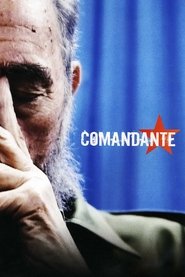
Comandante
2003

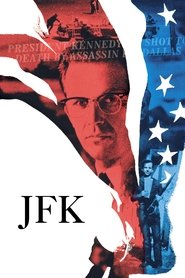
JFK
1991

Ethel
2012

Palme
2012

Naqoyqatsi
2002

El Che
2017

Topaz
1969

Elián
2017
08A
1993

Rat Pack
2022

The Inconclusive Independence
2010

The Boys from Brazil: Rise of the Bolsonaros
2022

Soundtrack to a Coup d'Etat
2024

Another Day of Life
2018

Summer of Soul (...Or, When the Revolution Could Not Be Televised)
2021

General Idi Amin Dada
1974
0Brascuba
1987

The Fog of War
2003

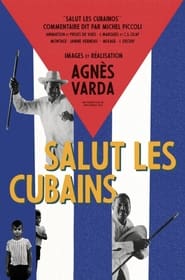
Hello Cubans
1963
ve 112 film daha...
Diziler (15)

Mentiras verdaderas
2011

Explained
2018

La Case du siècle
2010

Informe especial
1984

How to Become a Tyrant
2021

Bobby Kennedy for President
2018

Spycraft
2021
0Код доступа
2017
0Легенды кино
2016

The Century of Icons
2022
0Minnesota Experience
2018

História do Comunismo
2024

Faith of the Century: A History of Communism
1999
0Guerilleros
2015

Castro's Revolution vs. The World
2019